Work Engagement and Its Effect on Production Workers’ Productivity: Basis for a Strategic Intervention Plan
DOI:
https://doi.org/10.5281/zenodo.19859112Keywords:
Work Engagement, Employee Productivity, Emotional Engagement, Physical Engagement, Organizational PerformanceAbstract
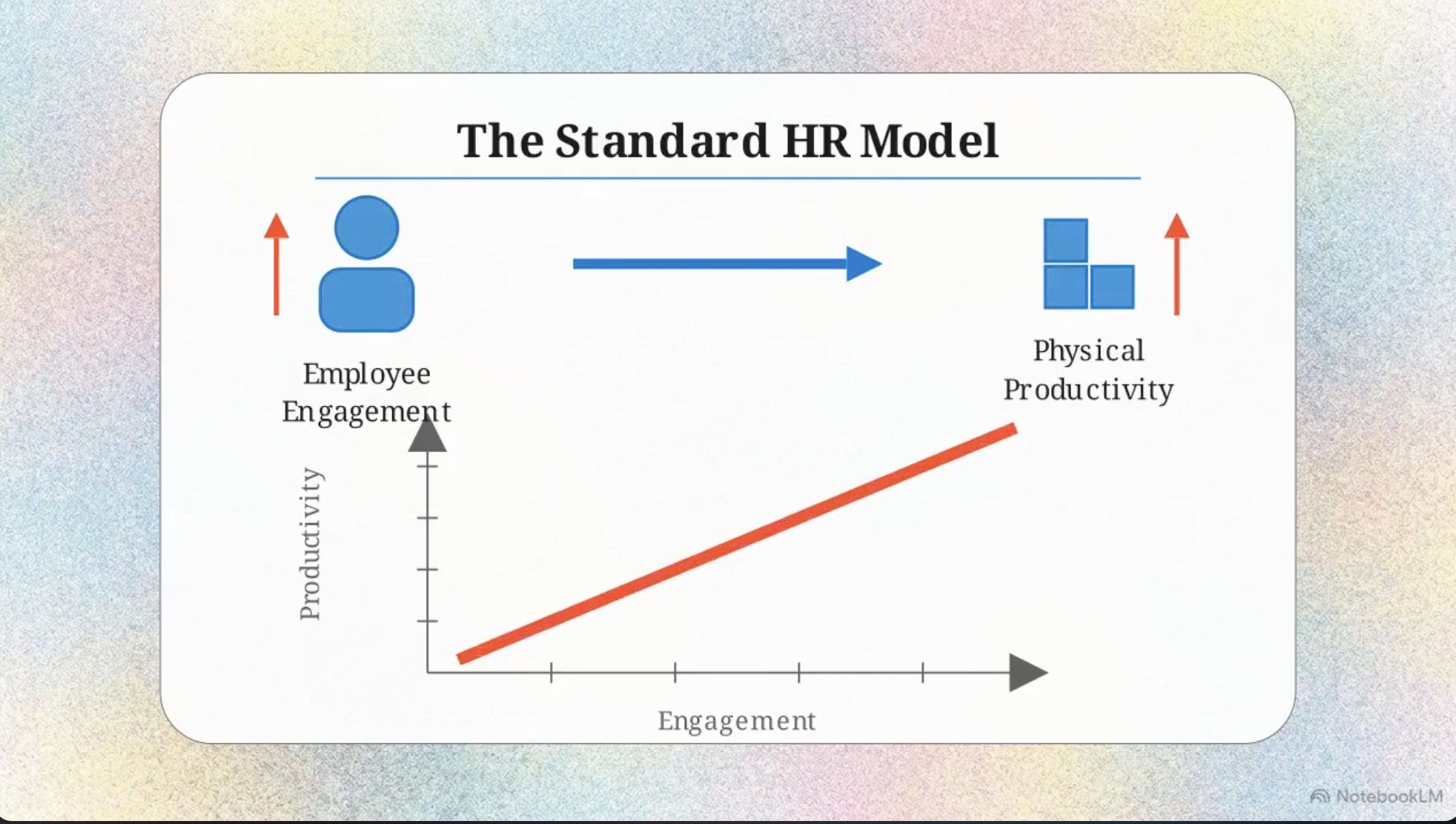
Employees are considered a company’s most valuable asset; thus, fostering work engagement is essential for enhancing morale and organizational performance. This study examines the impact of work engagement on the productivity of production workers, guided by Kahn’s Employee Engagement Theory. A quantitative research design was employed, utilizing survey data collected from 140 production workers. Productivity was measured based on output (packs, bags, and kilos) and working hours. Findings reveal that work engagement has a positive but weak relationship with workers’ productivity, contrasting with prior studies that reported strong positive effects. Among the three dimensions of engagement, physical engagement emerged as the most dominant, while emotional engagement was the least evident. This suggests that although workers are actively performing their tasks, their emotional connection to their work remains limited. The imbalance among engagement dimensions may explain the weak correlation observed. The results indicate that improving emotional engagement is crucial to strengthening overall productivity. The study recommends that management implement targeted strategies such as motivation programs, leadership support, and employee-centered initiatives to foster a more balanced and engaged workforce.
Downloads
References
Abun, D., Ranay, F. B., Magallanes, T., Encarnacion, M. J., & Alkalde, F. (2020). Employee treatment and work engagement: The Philippines context. Proteus – Cahiers des théories de l’art, 11(10), 153–175. https://doi.org/10.37896/PJ11.10/017
Bakker, A. B., & Demerouti, E. (2021). Job demands resources theory: Taking stock and looking forward. Journal of Occupational Health Psychology, 26(3), 193–212. https://doi.org/10.1037/ocp0000175
Baldoni, J. (2013). Employee engagement does more than boost productivity. Harvard Business Review. https://hbr.org/2013/07/employee-engagement-does-more
Cartwright, S. (2014). Maintaining a healthy balance in employee engagement. HR Magazine. https://www.hrmagazine.co.uk/content/features/healthy-balance
Christian, M. S., Garza, A. S., & Slaughter, J. E. (2019). Work engagement: A quantitative review and test of its relations with task performance. Journal of Applied Psychology, 104(2), 201–216. https://doi.org/10.1037/apl0000349
Collewet, M., & Sauermann, J. (2017). Working hours and productivity. Labour Economics, 47, 96–106. https://doi.org/10.1016/j.labeco.2017.03.006
Fetters, M. D., Curry, L. A., & Creswell, J. W. (2019). Achieving integration in mixed methods designs principles and practices. Health Services Research, 48(6 Pt 2), 2134–2156. https://doi.org/10.1111/1475-6773.12117
Hastings, R. (2009). The what and why of employee engagement. Society for Human Resource Management. https://www.shrm.org/resourcesandtools/hr-topics/employee- relations/pages/whatandwhy.aspx
Kahn, W. A. (1990). Psychological conditions of personal engagement and disengagement at work. Academy of Management Journal, 33(4), 692–724. https://doi.org/10.5465/256287
Kular, S., Gatenby, M., Rees, C., Soane, E., & Truss, K. (2008). Employee engagement: A literature review. Kingston University Press.
Li, Y., Wang, Z., & Liu, X. (2020). The relationship between employee engagement and productivity in manufacturing firms. International Journal of Productivity and Performance Management, 69(8), 1746–1763. https://doi.org/10.1108/IJPPM-06-2019- 0298
Rothbard, N. P. (2001). Enriching or depleting? The dynamics of engagement in work and family roles. Administrative Science Quarterly, 46(4), 655–684. https://doi.org/10.2307/3094827
Saxena, V., & Srivastava, R. K. (2015). Impact of employee engagement on employee performance: Case of manufacturing sector. International Journal of Productivity and Performance Management, 64(2), 157–173.
Shuck, B., & Reio, T. G. (2020). Employee engagement and wellbeing: A review and extension. Human Resource Development Quarterly, 31(3), 245–265. https://doi.org/10.1002/hrdq.21382
Turner, P. (2020). Employee engagement in contemporary organizations: Maintaining high productivity and competitiveness. Journal of Workplace Behavioral Studies, 5(2), 1–15.
Zhang, L., & Chen, X. (2022). Employee engagement, workplace environment, and productivity in manufacturing industries. Journal of Manufacturing Systems, 62, 487–499. https://doi.org/10.1016/j.jmsy.2022.05.003
Downloads
Published
How to Cite
Issue
Section
License
Copyright (c) 2026 Alieanna Balmes, Ivan Ray Cantillon, Jonavel Cardenas, Ma. Sherrie Jenessa Josol, Ana Chiara Stella Pantaleon, Justin Carl Vallo, Dennize Dean Velasio, Aaliyah Francesca Vitan, Angeleca Villena, Ryan dela Peña

This work is licensed under a Creative Commons Attribution-NonCommercial-NoDerivatives 4.0 International License.